

The Power of Connection: Why Relationships Drive Organisational Success
Connection is often described as a soft skill in leadership.
In my experience, it’s anything but that.
After more than 20 years of leadership across education, government and the not-for-profit sector, one truth remains constant: organisations perform at their best when people feel connected.

Resilience Isn’t Built Alone
Resilience has become one of the most talked-about ideas in leadership. We urge people to be more resilient, we run resilience training, and we talk about coping with change.
But resilience is often framed as if it is an individual responsibility, as if people simply need to toughen up.
My experience has been very different.
Resilience isn’t something people either have or don’t. It’s something leaders help create.
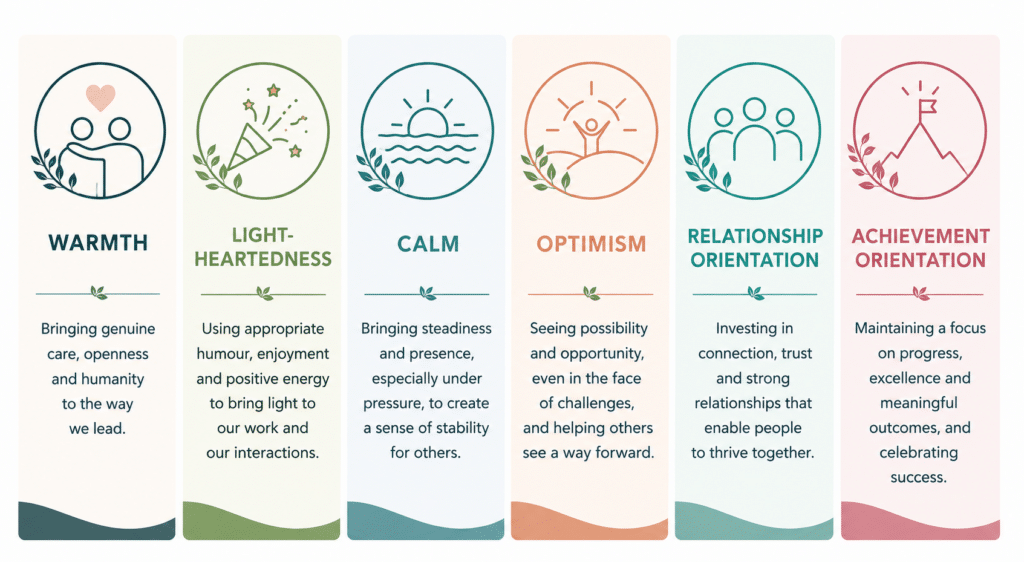
What Does Joyful Leadership Look Like?
For many years, leadership was often framed as a choice.
Leaders could focus on results, performance and productivity, or they could focus on people, wellbeing and creating a positive workplace culture. The underlying assumption was that there was a trade-off. Looking after people was seen as the softer option, while achieving results required a harder, more performance-driven approach.
Yet both research and practice are increasingly telling us a different story.
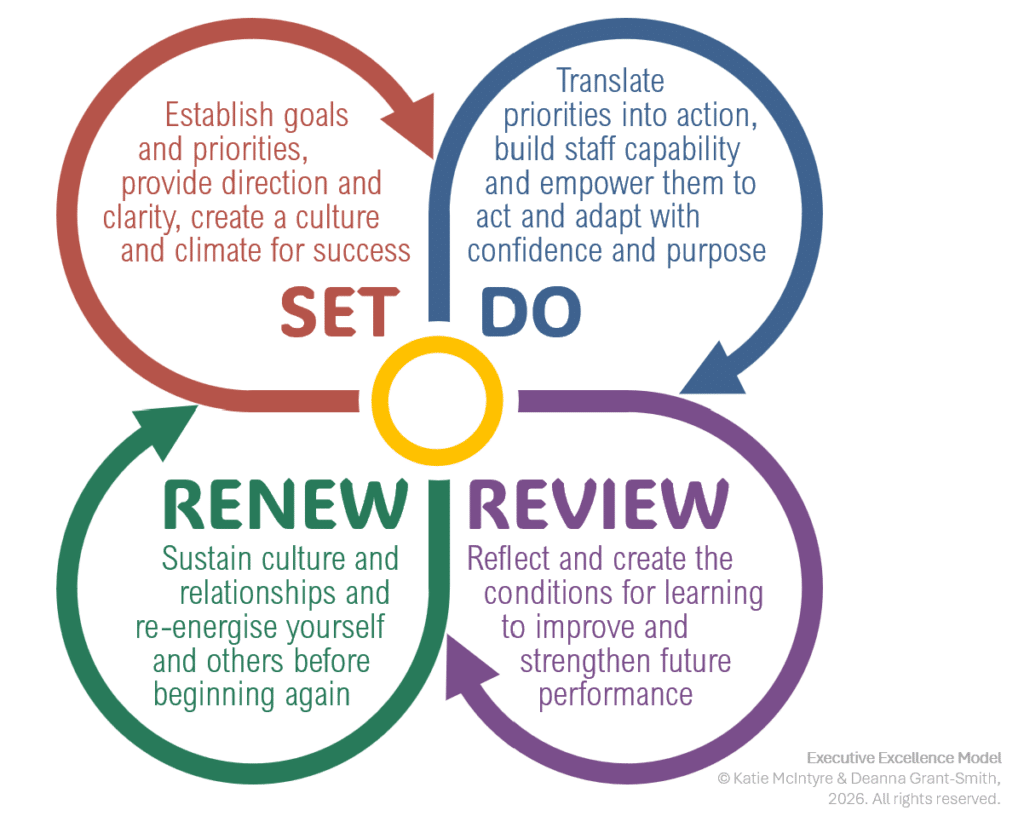
Executive Excellence Is a Process, Not a Destination
Great strategies do not always lead to great outcomes.
Organisations can have a compelling vision, talented people and carefully developed strategic priorities, yet still struggle to translate intent into meaningful action. The challenge is often not the strategy itself. It is what happens next.
Execution requires more than a plan. It requires clarity about what matters, the ability to act and adapt, opportunities to learn from what happens, and a culture that enables people to continue performing over time.

The Leadership Tension That Isn’t Really a Tension
For many years, leadership was often framed as a choice.
Leaders could focus on results, performance and productivity, or they could focus on people, wellbeing and creating a positive workplace culture. The underlying assumption was that there was a trade-off. Looking after people was seen as the softer option, while achieving results required a harder, more performance-driven approach.
Yet both research and practice are increasingly telling us a different story.

Joyful Leadership didn’t start as a business idea.
It started as something I couldn’t stop thinking about.
Years ago, I was working as a school leader alongside other school leaders, and I saw the difference leadership can make. I watched leaders lift teams up, build trust, and create environments where people felt safe, supported, and capable. I also saw how hard leadership can be, especially when you are carrying responsibility for people, culture, and outcomes all at once.

Finding Joy in Leadership: A New Kind of Conversation
Welcome to the Joyful Leadership Academy blog, a space for leaders and changemakers who believe leadership can be both effective and deeply human.
Here, we explore the research, ideas, and stories that shape joyful, ethical, and values led leadership.
It is about leading with courage, empathy, and clarity in the moments that matter most.
Join me as we uncover how joy can transform the way we lead, work, and connect.
The Power of Connection: Why Relationships Drive Organisational Success
Connection is often described as a soft skill in leadership.
In my experience, it’s anything but that.
After more than 20 years of leadership across education, government and the not-for-profit sector, one truth remains constant: organisations perform at their best when people feel connected.
Resilience Isn’t Built Alone
Resilience has become one of the most talked-about ideas in leadership. We urge people to be more resilient, we run resilience training, and we talk about coping with change.
But resilience is often framed as if it is an individual responsibility, as if people simply need to toughen up.
My experience has been very different.
Resilience isn’t something people either have or don’t. It’s something leaders help create.
What Does Joyful Leadership Look Like?
For many years, leadership was often framed as a choice.
Leaders could focus on results, performance and productivity, or they could focus on people, wellbeing and creating a positive workplace culture. The underlying assumption was that there was a trade-off. Looking after people was seen as the softer option, while achieving results required a harder, more performance-driven approach.
Yet both research and practice are increasingly telling us a different story.
Executive Excellence Is a Process, Not a Destination
Great strategies do not always lead to great outcomes.
Organisations can have a compelling vision, talented people and carefully developed strategic priorities, yet still struggle to translate intent into meaningful action. The challenge is often not the strategy itself. It is what happens next.
Execution requires more than a plan. It requires clarity about what matters, the ability to act and adapt, opportunities to learn from what happens, and a culture that enables people to continue performing over time.
The Leadership Tension That Isn’t Really a Tension
For many years, leadership was often framed as a choice.
Leaders could focus on results, performance and productivity, or they could focus on people, wellbeing and creating a positive workplace culture. The underlying assumption was that there was a trade-off. Looking after people was seen as the softer option, while achieving results required a harder, more performance-driven approach.
Yet both research and practice are increasingly telling us a different story.
Joyful Leadership didn’t start as a business idea.
It started as something I couldn’t stop thinking about.
Years ago, I was working as a school leader alongside other school leaders, and I saw the difference leadership can make. I watched leaders lift teams up, build trust, and create environments where people felt safe, supported, and capable. I also saw how hard leadership can be, especially when you are carrying responsibility for people, culture, and outcomes all at once.
Finding Joy in Leadership: A New Kind of Conversation
Welcome to the Joyful Leadership Academy blog, a space for leaders and changemakers who believe leadership can be both effective and deeply human.
Here, we explore the research, ideas, and stories that shape joyful, ethical, and values led leadership.
It is about leading with courage, empathy, and clarity in the moments that matter most.
Join me as we uncover how joy can transform the way we lead, work, and connect.